71st Ordinary General Assembly brought together representatives of government, civil society and the productive sector at DR Flavors & Ingredients in Jaraguá do Sul
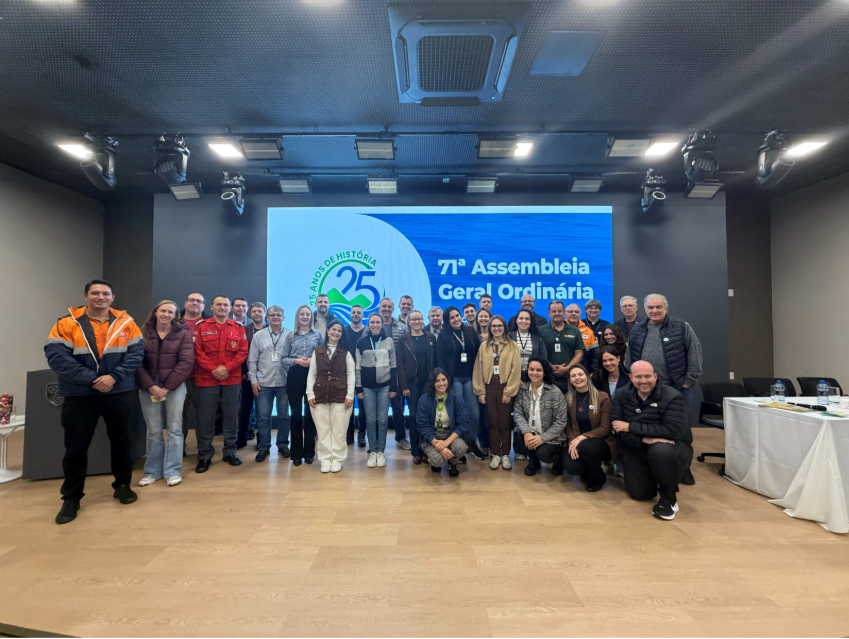
The challenges of managing water resources in Santa Catarina, conflicts over water use and the need to strengthen environmental monitoring were among the main topics discussed at the 71st Ordinary General Assembly of the Itapocu River Basin and Adjacent Basins Management Committee, held this Thursday (10) at the headquarters of DR Flavors & Ingredients in Jaraguá do Sul. The meeting also marked the 25th anniversary of the Itapocu Committee.
The assembly brought together representatives of government, civil society, the productive sector and water users to discuss issues that directly affect water management in the region. These included recommendations from an operational audit conducted by the State Court of Auditors of Santa Catarina (TCE-SC) on water resources policy and governance in the state, as well as a potential conflict over water use in the municipality of São Bento do Sul.
During the assembly, the Committee presented the main findings of the audit conducted by TCE-SC, which assessed the implementation of the instruments established under the State Water Resources Policy. Another highlight was the situation involving water withdrawal from the Rio Vermelho in São Bento do Sul. The Committee has been monitoring the case since July to better understand the conditions surrounding water withdrawal and issues related to water-use permits.
Water quality was also on the agenda. The Committee received a request from the municipality of São João do Itaperiú to assess the possibility of supporting water quality monitoring in the Itapocu River, including the definition of sampling points, frequency and parameters for physicochemical and microbiological analyses.
DR presents water management and conservation practices
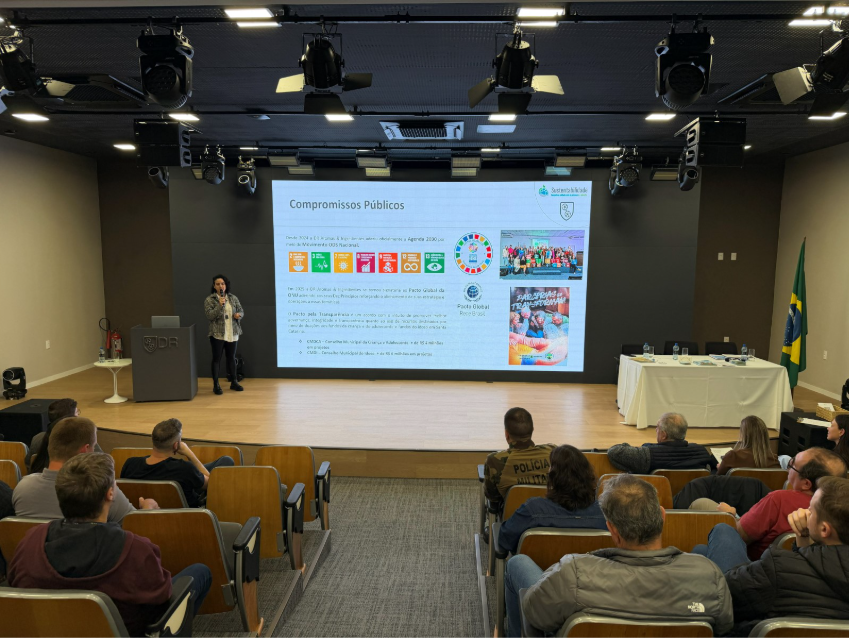
As host of the assembly, DR Flavors & Ingredients presented Committee members with some of the initiatives implemented at its headquarters for water treatment, monitoring and efficient use.
All water used in operations is withdrawn from the Itapocu River and treated at the Water Treatment Plant (WTP), which has a capacity of 100 cubic meters per hour. Treatment is carried out in batches, allowing water production to be adjusted to demand and avoiding unnecessary operation of the facility during periods of lower consumption. The company also maintains 1.05 million liters of treated water in storage.
The operation also includes a 72-meter-high elevated water tower with three compartments designated for raw water, water for consumption and technical reserve. The process includes analyses in accordance with the parameters established by Brazil’s Ministry of Health Ordinance GM/MS No. 888, as well as free chlorine monitoring as a critical control point.
Another initiative presented was the use of closed-loop cooling towers. Five systems are currently in operation, with two additional units under implementation and expected to be completed by 2027. The system allows water used for cooling to be recirculated, contributing to more efficient use of the resource.
Water monitoring is also being expanded. The facility has 38 water meters distributed throughout the manufacturing complex and is replacing older equipment with digital meters connected to a telemetry system. To date, 32% of the meters have been replaced. The technology makes it possible to monitor consumption, identify potential waste and respond more quickly to changes in key indicators.
The monitoring methodology is integrated into the company’s management indicators and is beginning to be shared with other DR units. The goal is to extend the same culture of monitoring and critical analysis to operations in Northeast Brazil, São Bernardo do Campo, Chile, Colombia and Mexico.
DR also presented its wastewater treatment infrastructure, which has a capacity of approximately 35 cubic meters per hour. According to the company, all wastewater generated by operations is sent for treatment before being discharged back into the river, achieving 98% efficiency in organic load removal. This rate is higher than the 80% required under Brazilian legislation.
A relationship built alongside the basin
DR’s participation in the Itapocu Committee dates back to the committee’s own history. Located at the confluence of the Itapocu and Jaraguá rivers, the company is a member of the Committee as a water user and, in 2001, received the Certificate of Merit for Management of the Itapocu River Basin.
As it celebrates its 25th anniversary, one of the Itapocu Committee’s key roles remains bringing different sectors together to discuss water-related challenges. For DR, hosting the commemorative assembly reinforces a relationship built over the years and the company’s commitment to preserving the region’s water resources.
Terminology and company naming were aligned with DR’s current English-language website, which uses DR Flavors & Ingredients and frames water conservation and the rational use of natural resources within its environmental and sustainability strategy.
Q&A | Itapocu Committee and DR Aromas & Ingredients
What did the Itapocu Committee celebrate?
The Itapocu Committee celebrated 25 years since its creation during its 71st Ordinary General Assembly.
How was the assembly held?
The assembly brought together representatives from government, civil society, the productive sector, and water users to discuss issues related to water resource management.
Where did the 71st Ordinary General Assembly take place?
The meeting was held at the headquarters of DR Flavors & Ingredients, in Jaraguá do Sul.
When did the assembly take place?
The 71st Ordinary General Assembly was held on Thursday (10), also marking the 25th anniversary of the Itapocu Committee.
Why was water management discussed at the meeting?
Because the region faces challenges in water resource management, conflicts over water use, and the need to strengthen environmental monitoring.