


'/%3E%3Cpath%20fill='%23b2b2b2'%20d='M241%20382q0%2016%2017%2026%2017%2011%2042%2011t42-11q16-11%2017-26V269H241'/%3E%3Cpath%20fill='%239f7e00'%20d='M241%20379q0%2014%208%2023%209%209%2021%209%2014%200%2021-9%209-9%209-23V269h-59'/%3E%3Cpath%20d='M241%20339v-70h59v110q0%2014-9%2023l-6%205v-68h-15v72q-8%200-14-4v-68zm59%2040c0%2022%2015%2032%2029%2032%2021%200%2030-18%2030-32v-40h-59'/%3E%3Cpath%20fill='%239f7e00'%20d='M266%20277v5h2v12h-3v-5h2v-5h-9v5h2v5h-4v9h3v18h-5v10h34v-10h-5v-18h3v-9h-4v-5h2v-5h-9v5h2v5h-3v-12h2v-5zm42%20101q0%2010%206%2017%206%206%2015%207%2010-1%2016-7%206-7%206-17v-29h-43'/%3E%3Ccircle%20fill='%230044ad'%20cx='329.5'%20cy='372'%20r='6'/%3E%3Cellipse%20fill='%230044ad'%20cx='300'%20cy='340'%20rx='16'%20ry='21'/%3E%3C/svg%3E)

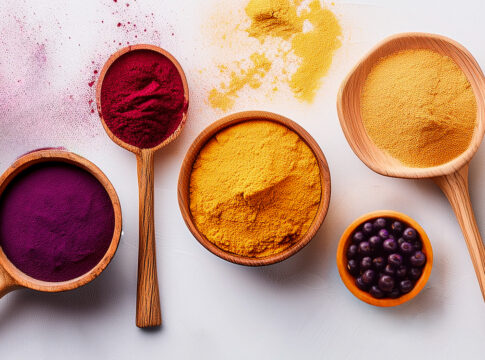
In the food and beverage industry, the search for ingredients that add nutritional benefits, facilitate processes and meet contemporary expectations of well-being has never been more intense.
Dehydrated ingredients are highlighted in this transformation: they align healthiness, practicality and innovation — attributes increasingly valued by both consumers and R&D professionals.
In this article, we will explore how these ingredients fulfill this role, what their benefits are, how they are produced, where they apply, and why their strategic adoption can elevate the portfolio of any company in the industry.
The role of dehydrated ingredients in consumer trends
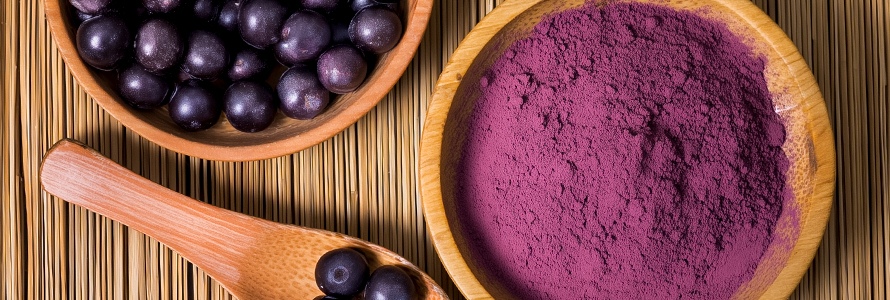
Today, consumers demand food solutions that combine health, convenience and novelty. Dehydrated ingredients correspond exactly to this triad: they offer concentrated nutritional value, are easy to incorporate into formulations, have an extended shelf life and enable products that are unique in texture, color and flavor — without relying on highly perishable ingredients.
The movement for healthiness, functionality and practicality drives categories such as snacks, functional drinks and convenience items in retail.
With the increase in conscious consumption, ingredients that allow reducing waste and improving the use of raw materials gain even more value.
Within this scenario of opportunities, according to a study by Straits Research, the global market for dehydrated fruits and vegetables was estimated at USD 58.02 billion in 2025, projected to reach approximately USD 94.97 billion in 2033, at a compound annual growth rate (CAGR) of about 6.35%. This reinforces how the trend of practical and healthy ingredients gains ground on a global scale.
Nutritional and functional benefits of dehydrated ingredients
Dehydrated ingredients go beyond convenience: they concentrate important nutrients such as fiber, vitamins, and bioactive compounds while preserving sensory attributes of color, texture, and flavor. Depending on the process used, it is also possible to ensure greater stability and expand the forms of application, creating products that balance nutritional value and sensory experience.
Nutrient concentration
The dehydration process removes water, but without necessarily eliminating essential nutrients. Dehydrated fruits, for example, conserve fiber, potassium and vitamins. Vegetables with lower water content may concentrate bioactive compounds such as carotenoids. Modern processes such as vacuum drying preserve sensitive vitamins (such as vitamin C and beta-carotene) far superior to the conventional air drying method.
Sensory — color, texture, flavor
In addition to the nutritional value, dehydrated ingredients play a decisive sensory role in the development of new products. The removal of water concentrates characteristics such as color and flavor, making powders and flakes more intense and attractive for formulations that seek visual and taste differentiation.
Texture variations — ranging from crispy to soft, through powders or pieces, expand the possibilities of application in different categories. This flexibility allows you to create everything from premium and indulgent snacks to functional drinks, desserts, cakes and breads, adding aesthetic appeal and experience to the end consumer.
What are the main methods of food dehydration?
There are different methods of dehydration, each with advantages and limitations. At this point, we will talk about the most applied and versatile processes, which are: spray dryer, drum dryer and vacuum dryer.
Spray dryer
Also known as atomization, spray dryer is a process that transforms liquids or emulsions into fine powders by spraying in a drying chamber. This method is widely used when flavor, color and aroma preservation is desired, in addition to ensuring good solubility. It is indicated for products that need quick drying and high productivity, resulting in practical ingredients for application in powder preparations for soft drinks and beverages in general, gummies, lozenges and food supplements.
Drum dryer
Known as drum drying, the drum dryer works by contacting the emulsion with heated cylinders that form a uniform dehydrated film. It is especially suitable for denser matrices or with high fruit and vegetable content, resulting in flakes or particles that maintain more noticeable texture and flavor characteristics. It is an interesting alternative for ingredients with a more evident sensory presence, such as in cookies, snacks, soups, sauces and children’s foods.
Vacuum dryer
In vacuum drying, the food is dehydrated at low temperatures and reduced pressure, which helps preserve heat-sensitive compounds. Although the vacuum dryer is a slower and batch process, it generates ingredients with greater retention of nutritional and sensory properties, delivering more structured and stable pieces, with low solubility and slow rehydration. It is widely used in applications that demand differentiation and premium quality, whether cookies, soups, toasted manioc flours, chocolates or cereal bars.
Advantageous practicality and logistics of dehydrated ingredients
Going beyond the nutritional and sensory benefits, dehydrated ingredients represent a competitive advantage when we look at the production chain.
By eliminating much of the water present in fruits, vegetables and other foods, dehydration not only increases durability but also reduces operating costs, facilitates storage and optimizes transportation.
In a global market where efficiency and sustainability coexist, relying on inputs that combine high technological performance with logistical gains is a strategic advantage for brands that want to expand their portfolios with agility and safety.
Reduction of waste and better conservation
Dehydration significantly reduces the risk of microbial deterioration. By drying ingredients, the shelf life is extended, facilitating inventories and reducing post-harvest or during transportation losses.
Handling, transport and storage
Dehydrated ingredients occupy less volume, are lighter, do not depend on refrigeration (in many cases) and tolerate climatic fluctuations more robustly. This allows for reduced logistics costs, simpler storage, less need for cold equipment, and less risk of chain breakage. Especially valuable in regional markets or export.
Applications in different categories
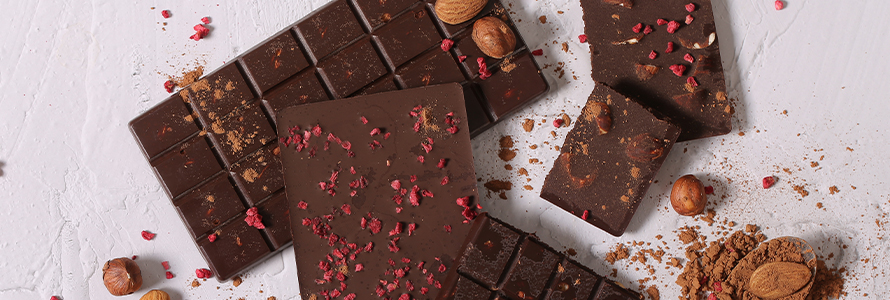
Dehydrated ingredients stand out for their remarkable versatility. By combining stability, nutritional value, and a variety of formats (powders, flakes, pieces), they can be incorporated into multiple product categories, from indulgent to health-focused markets.
This means the ability to develop products aligned with different consumer profiles—from those seeking unique sensory experiences to those who prioritize convenience and well-being. This flexibility makes dehydrated ingredients essential allies in the creation of innovative and competitive portfolios on a global scale.
- Snacks, confectionery and sweets: healthy snacks, cookies, gummies, chocolates and ice cream inclusions.
- Bakery and soups: breads, cakes, ready-made soups and solutions for sauces and creams.
- Bars and supplements: cereal bars, protein bars, powdered supplements.
- Beverages and refreshments: powdered refreshments, functional drinks and dairy applications in general.
- Other segments: gourmet preparations that explore unique tastes, colors and textures.
Dehydrated ingredients are strategic allies
Dehydrated ingredients are not just a technical alternative or a passing fad: they are strategic allies for those who want to develop innovative products that combine healthiness, practicality and innovation. They make it possible to concentrate nutrients, deliver unique textures and colors, reduce losses, and simplify logistics—critical factors in an increasingly demanding market.
Let’s turn trends and opportunities into off-the-shelf successes together? We are ready to co-create dehydrated ingredients tailored to your categories and needs.