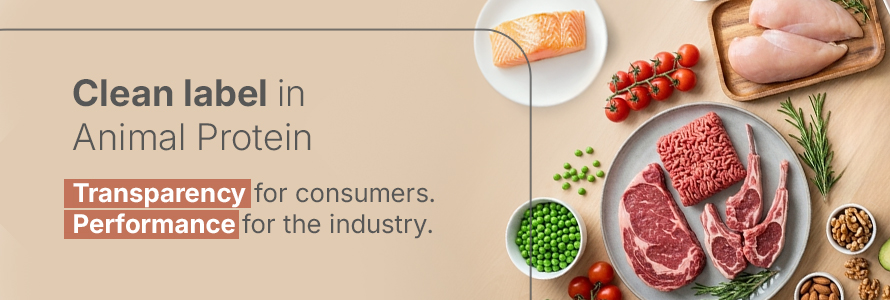



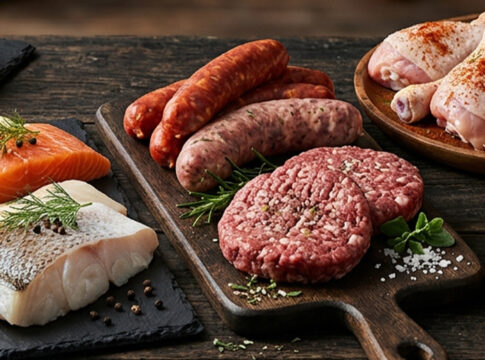
The clean label movement has been redefining the way consumers perceive quality in the food industry.
If before attributes such as flavor, practicality and price concentrated much of the purchase decision, today factors such as transparency, naturalness and familiarity of ingredients have come to occupy an equally strategic role, especially in categories related to animal protein.
This movement is not only related to the reduction of artificial additives. The concept of clean label in animal protein involves intelligently simplifying formulations, replacing ingredients perceived as artificial or overly technical with more natural, recognizable and understandable alternatives for the consumer.
The industry faces a complex challenge: meeting new consumption expectations without compromising fundamental attributes for the performance of meat products, such as oxidative stability, microbiological safety, texture, yield, shelf life and industrial standardization.
Also read: Generation Alpha and the clean label revolution: challenges and opportunities for the industry
What’s behind the clean label advancement
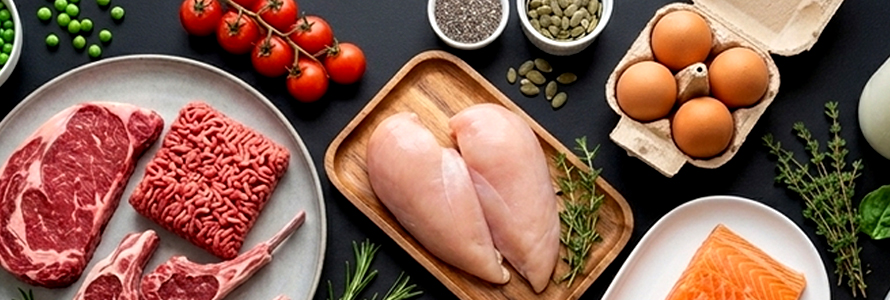
The growth of the clean label movement accompanies important changes in consumption behavior. In a scenario marked by the excess of information and the expansion of access to content on food and health, consumers began to observe the labels with more attention and critical sense.
According to Mintel, 69% of Brazilians say they are interested in products with natural ingredients, while 74% say they trust brands that clearly communicate their ingredients and production processes. In addition, 59% prefer products with claims of “less” or “no” sugar, sodium, fat, etc.
This data helps explain why the concept has evolved so rapidly in recent years. The clean label is no longer associated only with the removal of artificial ingredients to incorporate new demands related to transparency, traceability, healthiness and perception of authenticity.
How the clean label on animal protein is transforming the market

In the animal protein category, the impact of this movement is even more sensitive. This is because meat products traditionally depend on functional ingredients and systems that play a direct role in stability, conservation, texture, yield and microbiological safety.
At the same time, the market pressure for simpler, more transparent formulations aligned with the perception of naturalness is growing.
Also according to Mintel, one in four Brazilians claims to prioritize meat with animal welfare or antibiotic-free certifications, mainly for issues related to health and food safety.
This behavior has been accelerating the development of products focused on naturalness, transparency and perceived value, boosting attributes such as:
- Formulations with fewer artificial additives
- Natural and recognizable ingredients
- “Free of” claims
- Traceability and controlled origin
- Greater clarity in the communication of ingredients and production processes
This transformation can already be observed in different categories, including sausages, hamburgers, breads, refrigerated products, protein snacks and ready meals. The animal protein industry is reviewing the very concept of quality.
Competitive products depend not only on industrial performance or sensory acceptance, but also on the ability to convey confidence through the composition and clarity of the information presented to the consumer.
Also read: 2026 food trends: what will drive innovation in the Food and Beverage Market
What does the consumer expect from meat products today?

Although the interest in naturalness has grown, this does not mean that the consumer is willing to sacrifice the sensory experience.
In the animal protein segment, taste, texture, appearance, juiciness and stability remain decisive attributes for acceptance and repurchase. What changes is that now these factors need to coexist with simpler formulations and ingredients perceived as more natural.
There is a growing expectation for products that feature:
- Shorter ingredient lists
- Recognizable ingredients
- Objective communication
- Less perception of artificiality
- Balance between indulgence and healthiness
At the same time, there is a growing interest in information related to the origin of ingredients, production methods and transparency of the production chain. An example of this is that the search for traceability has been expanding the use of packaging with QR codes and detailed information about the production chain.
This indicates that for the current consumer, trust is not only related to the brand, but to the product’s ability to convey clarity and coherence between formulation, positioning and consumer experience.
The technical challenges of the clean label in animal protein
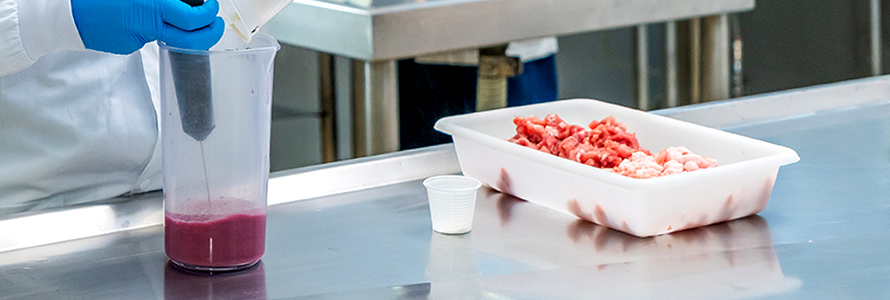
If from the consumer’s point of view the clean label seems simple, from an industrial point of view it represents a complex transformation of the animal protein category.
Many ingredients traditionally used in meat formulations perform critical functions related to conservation, microbiological control, oxidative stability, water retention, etc.
Replacing these components requires solutions capable of preserving technological performance without compromising food safety and stability during storage.
In animal proteins, challenges become even more relevant due to high susceptibility to lipid oxidation and sensory changes throughout the lifespan.
Color changes, development of rancid taste, loss of freshness and texture changes can directly impact the consumer’s perception of quality.
Therefore, the development of clean label formulations requires in-depth knowledge about ingredient functionality, behavior of meat products and interactions between processing, conservation and sensory stability.
Also read: Artificial intelligence in the food industry: how technology is transforming the sector
How the industry can enable clean label formulations with performance

Enabling clean label formulations in animal protein requires a much more strategic approach than simply removing additives or reducing ingredient lists.
The challenge is to reconstruct functional systems capable of maintaining stability, microbiological safety, yield and sensory experience within parameters compatible with the industrial scale.
This causes the industry to adopt more strategic approaches to reformulation, seeking ingredients capable of performing equivalent technological functions from sources more aligned with the consumer’s perception of naturalness.
This is why natural antioxidants, plant extracts, fermented, natural stabilizers and sensory building solutions play a key role within formulations.
These ingredients contribute directly to critical category parameters such as color preservation, oxidative control, microbiological stability, moisture retention, texture and shelf life.
In meat applications, small formulation changes can significantly impact attributes related to appearance, juiciness, flavor, and stability throughout storage.
Natural solutions with antioxidant action, for example, can assist in the preservation of sensory characteristics and in the delay of lipid oxidation, contributing to the maintenance of flavor, aroma and color during the shelf life of the products.
Fermented systems and natural solutions for conservation help to increase microbiological stability without compromising the proposed naturalness of the formulation.
The same happens with ingredients aimed at retaining moisture, texture and yield. In meat products, these parameters directly influence the processing, industrial standardization and perception of quality by the final consumer, making the technical development of clean label solutions a decisive factor for the industrial viability and competitiveness of brands.
Our expert solutions support this transition
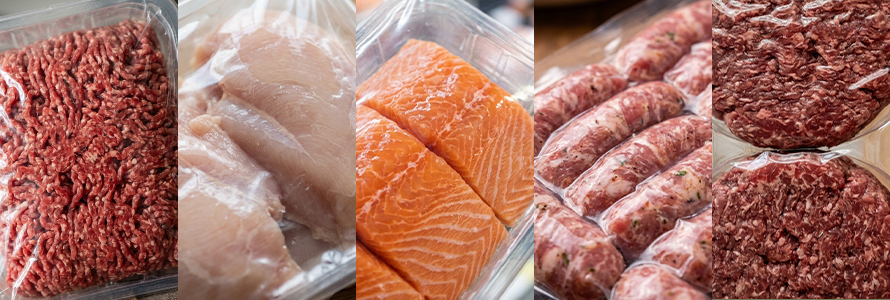
At DR Flavors & Ingredients, we understand that the advancement of the clean label in animal protein requires translating transparency, quality and confidence from the first look to the last bite.
Therefore, we develop solutions aimed at the intelligent simplification of formulations, preserving essential attributes for stability, microbiological safety, texture, yield and sensory experience in different meat applications.
Our portfolio brings together natural solutions developed to address category-specific challenges, including oxidative control, microbiological conservation, texture preservation, color stability, and sensory construction.
Among them are natural, fermented antioxidants, natural stabilizers, plant extracts, flavor enhancers, condiments and flavors developed for applications that demand a greater balance between technical performance and perception of naturalness.
In addition to technological functionality, our solutions are developed to support R&D teams in building products more in line with current consumer expectations, integrating trend, healthiness and flavor in each project.
Explore our portfolio, discover the possibilities and come build the next generation of clean label foods.