




Reducing the sugar content of a beverage without sacrificing sweetness, lowering the sodium content of a snack while maintaining flavor intensity, or adding proteins without intensifying off-notes are challenges that are part of the daily routine of R&D teams in the food and beverage industry.
Behind all of these lies the same challenge: improving the nutritional profile of products without compromising the sensory experience consumers expect.
And this expectation is reflected in the data. In a survey conducted by Ecglobal in June 2026 with more than 500 participants, less sugar was the most frequently cited health-related criterion (35% of respondents), followed by less fat (31%) and less sodium (29%). These three criteria correspond exactly to the three key areas addressed by the TFT portfolio.
The study also identifies price and flavor as two of the main barriers to purchasing products positioned as healthy. For R&D teams, this means taking a holistic approach to reformulation: composition, processing, and sensory perception must work together.
With our TasteFull Technologies (TFT) line, we offer solutions that help bring these goals together and develop products with improved nutritional profiles while preserving the enjoyment of consumption.
What is TasteFull Technologies and how does it combine health and flavor?
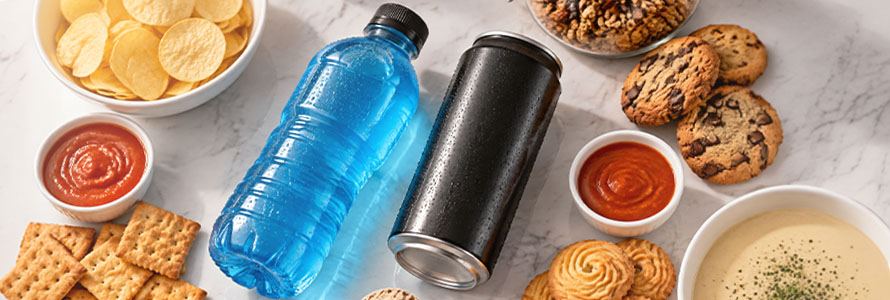
TasteFull Technologies is our portfolio of solutions based on sensory science and flavor technology, designed to help modulate the sensory profile of food, beverages, and supplements.
The line addresses two complementary areas: enhancing desirable attributes in formulations with reduced sugar, sodium, and fat, and modulating off-notes associated with the incorporation of functional ingredients.
In practice, this makes it possible to adjust the perception of sweetness, saltiness, creaminess, and mouthfeel according to the specific challenges of each product. These attributes contribute to an enjoyable consumption experience, whether in a crunchy cookie or a full-bodied beverage.
An analysis published by SA+ in June 2026 also identifies the simultaneous pursuit of nutritional benefits and distinctive sensory experiences as one of the trends driving innovation in the sector. To translate this demand into a product, the choice of technology must take into account the product matrix and the desired outcome.
Also read: What is the impact of GLP-1 medications on the food industry?
What are the main challenges of food and beverage reformulation?

Reformulating a product goes far beyond removing one ingredient and replacing it with another, because sugar, salt, and fat serve functions that extend beyond flavor.
Sugar contributes to volume, body, and texture; salt enhances other flavors and helps mask bitter notes; and fat acts as a carrier for flavors, influencing how they are released and perceived.
When these components are removed or replaced, previously balanced relationships within the formulation are altered: reducing sugar can decrease the perception of sweetness and body; reducing salt can weaken saltiness and make other notes more noticeable; and replacing fat sources requires careful consideration of processing, crunchiness, and flavor.
That is why achieving a nutritional target requires considering both how the product behaves during manufacturing and how it is perceived by consumers.
In many cases, the substitute itself becomes part of the challenge. Some high-intensity sweeteners, such as stevia, can introduce bitterness, licorice notes, or lingering sweetness, while potassium chloride-based salt substitutes tend to leave bitter and metallic notes, meaning that each adjustment may create a new challenge to address in the formulation.
The opposite approach, adding proteins or functional ingredients, presents its own challenges. Plant-based proteins can impart green and cereal notes, caffeine and collagen can contribute bitterness and other off-notes, and formulations containing iron may exhibit metallic notes and astringency.
These are precisely the characteristics that guide the selection of the most suitable modulator, capable of adjusting the attributes that affect the desired profile without compromising the product’s sensory identity.
Also read: Gut health: what’s behind the new generation of beverages and supplements?
How does the TFT portfolio modulate flavor and texture?

Each technology serves a specific function. Our portfolio brings together solutions to support ingredient reduction, enhance perceived texture, and balance off-notes, with applications in beverages, cookies, snacks, soups, sauces, baked goods, and supplements. Check it out!
Sugar reduction and sweetness modulation
TFT T-Sweet R is a natural flavor developed to enhance the perception of sweetness in reduced-sugar products. In a test involving a lemon-flavored soft drink with 25% less sugar, the sample containing the technology exhibited greater perceived sweetness and lower perceived acidity compared to the formulation with sugar reduction alone.
TFT T-Sweet M works in conjunction with sweeteners, helping to modulate their lingering off-notes and create a more balanced sweetness profile. Its performance was evaluated in a sugar-free ready-to-drink tea by comparing formulations containing a sweetener, with and without the technology.
Applications include alcoholic and nonalcoholic beverages, dairy beverages, cookies, cakes, sauces, and supplements.
Sodium reduction and front-of-package labeling
TFT Flor de Sal enhances salty notes, while TFT NaLess combines raw materials in a powdered preparation to help reduce sodium content while preserving the desired sensory profile.
In tests involving cheese-flavored corn snacks, both were evaluated in reduced-sodium formulations designed to meet front-of-package labeling requirements. The samples containing the technologies exhibited greater saltiness intensity compared to formulations with salt reduction alone.
The portfolio also includes TFT SavoryUp, a natural flavor that enhances umami notes. In a protein-rich soup, it increased the perception of umami, saltiness, and mouthfeel compared to the control sample and yeast extract.
According to Anvisa, the thresholds for declaring a product high in sodium are 600 mg per 100 g for solid or semi-solid foods and 300 mg per 100 mL for liquids. The technologies support sensory reformulation; compliance with labeling requirements depends on the final composition and the regulations applicable to the product category.
Saturated fat reduction and process preservation
TFT OffSat helps reduce saturated fat in combination with vegetable oils, such as soybean or sunflower oil, while helping maintain machinability, crunchiness, and flavor in sweet cookies.
In sandwich cookie shells, partial fat replacement using the technology demonstrated the potential to reduce saturated fat by up to 90%, a result that depends on the formulation and should not be extrapolated to all cookie categories.
The tests also found no significant difference in the overall quality of the sweet cookies evaluated, providing a reference for projects that need to balance reformulation with sensory performance.
Texture, creaminess, and mouthfeel
TFT CreamyFeel provides a greater sensation of creaminess, body, and mouth-filling texture, enhancing mouthfeel—the way a product feels in the mouth during consumption.
In a dairy beverage, the sample containing the technology exhibited greater perceived mouth-filling texture and creaminess compared to the control sample. Its applications include dairy and plant-based beverages, chocolate drinks, whey protein, and plant-based protein products.
Modulation of bitterness and off-notes
For formulations containing functional ingredients, the portfolio offers three modulators, each developed to address a specific sensory note:
- TFT Bitter Block: targets bitterness and off-notes from ingredients such as caffeine and collagen. It was evaluated in a pineapple-flavored pre-workout supplement.
- TFT IMA: reduces the perception of cereal, green, and vegetal notes in formulations containing whole-grain ingredients and plant-based proteins. Tests include whole-grain sweet cookies and plant-based protein beverages.
- TFT FeMask: targets metallic notes and astringency. In a raspberry-flavored iron supplement, it reduced the perception of metallic odor and astringency.
Also read: Generation Alpha and the clean label revolution: challenges and opportunities for the industry
The practical benefits of TasteFull Technologies for R&D

Application tests help link each technology to a specific challenge. We conducted sensory comparisons involving soft drinks, dairy beverages, snacks, cookies, and supplements, identifying attributes that showed statistically significant differences at p ≤ 0.05.
For R&D teams, this evidence supports the selection of solutions and the planning of tests using their own formulations. For Regulatory Affairs and Purchasing teams, they provide a basis for discussing ingredient selection in conjunction with composition targets, applications, and product requirements.
The results demonstrate changes in the attributes evaluated and guide product development. Acceptance by the target audience must be confirmed through specific consumer testing, depending on the project.
How does DR Flavors & Ingredients support the development of healthier, better-tasting products?

With 100 years of history, we bring together expertise in flavors, ingredients, and applications to help the industry develop formulations that meet market demands.
Our technical team works closely with product development teams to connect sensory challenges with the solutions available in our portfolio. With TasteFull Technologies, we can support projects involving ingredient reduction and the incorporation of functional ingredients, taking into account the desired flavor and texture profile.
Health and flavor can be part of the same experience. Technology makes it possible to move in this direction through decisions guided by the application and sensory results.
Contact our team and discover the TFT solutions for your formulation.