


'/%3E%3Cpath%20fill='%23b2b2b2'%20d='M241%20382q0%2016%2017%2026%2017%2011%2042%2011t42-11q16-11%2017-26V269H241'/%3E%3Cpath%20fill='%239f7e00'%20d='M241%20379q0%2014%208%2023%209%209%2021%209%2014%200%2021-9%209-9%209-23V269h-59'/%3E%3Cpath%20d='M241%20339v-70h59v110q0%2014-9%2023l-6%205v-68h-15v72q-8%200-14-4v-68zm59%2040c0%2022%2015%2032%2029%2032%2021%200%2030-18%2030-32v-40h-59'/%3E%3Cpath%20fill='%239f7e00'%20d='M266%20277v5h2v12h-3v-5h2v-5h-9v5h2v5h-4v9h3v18h-5v10h34v-10h-5v-18h3v-9h-4v-5h2v-5h-9v5h2v5h-3v-12h2v-5zm42%20101q0%2010%206%2017%206%206%2015%207%2010-1%2016-7%206-7%206-17v-29h-43'/%3E%3Ccircle%20fill='%230044ad'%20cx='329.5'%20cy='372'%20r='6'/%3E%3Cellipse%20fill='%230044ad'%20cx='300'%20cy='340'%20rx='16'%20ry='21'/%3E%3C/svg%3E)

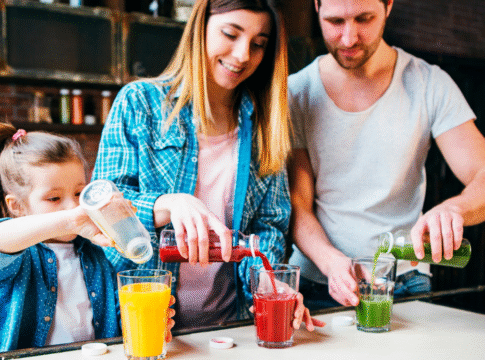
Current consumer trends, coupled with economic and social factors, will guide industry launches over the coming months
The food and beverage industry is constantly evolving in order to adapt to the emerging needs and expectations of consumers. Consumers, in turn, are increasingly aware of the impact that their choices have on personal well-being and the planet.
Trends that are expected to drive product launches in the sector in 2025 are the result of a combination of factors, ranging from a global context marked by a sense of unpredictability, price sensitivity and growing pressure on supply chains. In addition to the external scenario, growing consumption behavior, including increased concern for health, sustainability, authentic experiences and the integration of technological innovations in food and beverages are decisive in the development and launch of products.
Based on analysis and studies of large market research companies, the main macro trends for the food industry in 2025 are listed below. These trends indicate certain new directions in the industry, as well as opportunities for innovation among brands.
Taste is synonymous with pleasure
According to FMCG, 70% of global consumers believe that taste is the most influential factor in shaping perceptions regarding the cost-effectiveness of a product.
The focus on taste, coupled with the search for comfort and pleasure in a world seen as unstable by consumers, reinforces the importance of permissible indulgence, through guilt-free experiences that offer rewarding flavors and textures.
For the company, this trend represents a movement towards an increase in premium products that provide rich sensory experiences.
Uncertain times are also reflected in the preference for familiar foods and beverages, which increases demand for nostalgic references that offer emotional comfort to consumers.
It is important to note, however, that these experiences are also accompanied by a sense balance and moderation, without neglecting emotional and nutritional self-care.
As a result, in Mintel’s view, food and beverages trends in 2025 are rooted in consumer complexities, which can involve often contradictory pathways, including health and indulgence.
This is a trend that the market research agency classifies as “a rebellion of rules.”
Learn more about market examples aligned with this trend:
Holistic wellbeing
On an emotional level, 38% of global consumers say they often feel anxious, according to FMCG.
This trend highlights the growing demand among consumers for taking time for themselves amid the worries and stress of everyday life. Brands have therefore sought to promote and endorse self-care practices aimed at helping consumers manage their well-being. In the food and beverage industry, this is reflected in products that help consumers with health-related aspects such as sleep, mood and relaxation.
When it comes to physical health, Innova Marketing Insights highlights that most consumers are using nutrition as a tool to help manage their health issues.
This trend towards well-being continues to manifest itself in balanced nutrition in functional products, which contribute to performance during sport as part of weight loss or maintenance, for example.
Additionally, according to Mintel, the emergence of weight-loss drugs such as Ozempic is expected to redefine consumption and perceptions of “food as medicine,” from added functional ingredients to the daily intake of essential nutrients.
In Mintel’s analysis, consumers previously sought out “food as medicine” and resorted to functional products. Moving forward, there will be a focus on foods and beverages that help consumers, particularly those taking weight-loss medications and therefore have a reduced appetite, get the best nutrition from their diets. Such products will offer easy-to-understand claims about protein, fiber and vitamin content.
In line with this trend, it was identified that 83% of Brazilians prefer foods that leave them satiated for longer periods of time, while 42% choose products high in fiber and 40% opt for high protein content to ensure they feel full.
Another key point highlighted by Innova is consumers’ returning focus on gut health. Gut health is the main driver behind functional food and beverage purchases and includes ingredients such as fiber and probiotics. Additionally, trends in the food industry involving support for good gut health is spreading to other product categories such as snacks.
Learn more about market examples aligned with this trend:
Timeless traditions and authenticity
The appreciation of traditional and artisanal products, which are often linked to culture and culinary heritage, is creating a wave of innovations based on authentic flavors, according to market research companies.
This move signifies a shift toward the adoption of traditional values and a preference for simplicity as a response to the rapid changes and uncertainties of the modern world. Consumers are finding solace in the familiar when deciding on a purchase.
At the same time, this trend is reflected in the desire for diverse and authentic culinary experiences that promote a sense of cultural connection.
At the same time, this trend is reflected in the desire for diverse and authentic culinary experiences that promote a sense of cultural connection.
This movement has also led to the invention of new flavors through the fusion of different cuisines, from the combination of sweet and savory flavors and the mixing of food categories or unusual taste experiences.
Learn more about market examples aligned with this trend:
Conscious consumption: sustainability and social responsibility
This trend towards conscious consumption continues to expand, and consumers are demanding greater transparency and higher ethical standards from brands.
By 2025, a strong commitment to sustainable practices and respect for the environment are expected to be essential requirements. Consumers will seek out products that do not harm the environment and brands that demonstrate a real commitment to environmental and social causes.
Sustainability in the sourcing of ingredients, the use of responsible agricultural technologies, and reduction in carbon footprint will be important factors for companies looking to remain relevant and competitive in the global marketplace.
According to FMCG’s data, 32% of consumers seek to avoid environmentally damaging ingredients.
Innova Marketing Insights also highlights the impact of climate change on supply chains. Droughts, floods, heat waves, and climate-related diseases are creating shortages of certain ingredients and foods, particularly sensitive crops like cocoa, coffee, and olive oil.
This scenario has led companies to seek out innovative alternatives and new formulations.
Another aspect observed in Mintel’s reports on sector trends is the integration between nature and technology in food and beverage production. This junction is critical to addressing current food supply challenges.
Mintel therefore points out that technological tools must be combined with traditional cultivation and production methods. However, food and beverage brands will need to prove to consumers that nature and technology can complement one another and improve processes.
Learn more about market examples aligned with this trend:
Food and artificial intelligence
It is no longer possible to talk about technology without considering the transformations that Artificial Intelligence is introducing in different areas of the industry and the market, from production through to the consumer experience and customization of the customer journey.
Additionally, according to data from Mintel, 47% of Brazilian consumers agree that technology should be able to help us live more sustainably. The use of such tools can therefore help improve sustainable processes and food production practices.
The use of AI can also contribute to optimizing production and creating ingredients, which will also require transparency from brands in order for these innovations to inspire consumer confidence.
Conclusion
As can be observed by these figures, the food and beverage sector in 2025 will be marked by intersecting trends focused on health, sustainability, innovation and authenticity.
Consumers are becoming increasingly demanding, seeking out products and experiences that meet their emotional and physical needs, without leaving social and environmental responsibility by the wayside.
For brands, understanding these trends and innovating in a creative and ethical manner will be essential to setting themselves apart in a dynamic market.