


'/%3E%3Cpath%20fill='%23b2b2b2'%20d='M241%20382q0%2016%2017%2026%2017%2011%2042%2011t42-11q16-11%2017-26V269H241'/%3E%3Cpath%20fill='%239f7e00'%20d='M241%20379q0%2014%208%2023%209%209%2021%209%2014%200%2021-9%209-9%209-23V269h-59'/%3E%3Cpath%20d='M241%20339v-70h59v110q0%2014-9%2023l-6%205v-68h-15v72q-8%200-14-4v-68zm59%2040c0%2022%2015%2032%2029%2032%2021%200%2030-18%2030-32v-40h-59'/%3E%3Cpath%20fill='%239f7e00'%20d='M266%20277v5h2v12h-3v-5h2v-5h-9v5h2v5h-4v9h3v18h-5v10h34v-10h-5v-18h3v-9h-4v-5h2v-5h-9v5h2v5h-3v-12h2v-5zm42%20101q0%2010%206%2017%206%206%2015%207%2010-1%2016-7%206-7%206-17v-29h-43'/%3E%3Ccircle%20fill='%230044ad'%20cx='329.5'%20cy='372'%20r='6'/%3E%3Cellipse%20fill='%230044ad'%20cx='300'%20cy='340'%20rx='16'%20ry='21'/%3E%3C/svg%3E)


Demand for a more balanced diet that is rich in nutrients and high quality ingredients has never been so high. Increased awareness of issues surrounding health and wellness coupled with access to detailed nutrition information has led consumers to prioritize natural foods and proteins that offer functional benefits, contribute to their longevity, and aid in physical and mental performance.
In this article, you will learn about the key factors driving this trend, from the growing popularity of protein diets to concern for sustainability. We will also be addressing opportunities that the food industry is able to take advantage of in meeting this new demand in an innovative manner aligned with the expectations of the modern consumer.
Driving Factors Behind Natural and Protein Food Trends
The growing consumption of natural foods and proteins is not an isolated phenomenon, but rather the result of several forces converging on a new form of food consumption.
Contemporary consumers have become increasingly attentive to the composition of food products, prioritizing natural ingredients with proven health benefits.
Additionally, changes in lifestyle habits, such as the adoption of specific diets and concern for the environmental impacts of food production, have driven the popularity of certain categories of products such as gluten-free and lactose-free items. Consumers are also increasingly to reduce their consumption of sugar, fat or sodium and products that are high in protein.
The following sections will explore the key factors that have strengthened this growing trend and transformed the food and beverage market.
You may also be interested in: Industry Trends at The Food Tech Summit & Expo 2024
1. The search for a balanced diet
Concern for health and well-being is one of the main driving factors behind the consumption of natural foods and proteins.
The food sector in Brazil showed a positive performance in 2024, according to data from the Brazilian Food Industry Association (Abia). Revenue in the domestic market totaled R$586.2 billion, reflecting the strength of the industry. With regards to foreign trade, exports totaled US$ 30.7 billion in the first half of the year alone, registering a growth of 19.1% in volume and 8.5% in value compared to the same period during the previous year.
Additionally, Euromonitor’s “Lifestyle Survey”, conducted in 2017 among 30,000 consumers in 21 countries, previously revealed that 20% of Brazilians were willing to pay more for natural foods.
Within this context, proteins of plant and animal origin have gained prominence due to their offering benefits such as prolonged satiety, maintenance of muscle mass and support for metabolism.
The combination of natural ingredients with high protein content has become a competitive advantage in the food industry.
2. Rising popularity of protein diets
The popularity of high-protein, ketogenic, and plant-based diets continues to grow — a trend that reflects an emphasis among consumers on dietary strategies that promote increases in energy, weight management, and metabolic health.
A report from Innova Market Insights pointed out that consumers are becoming increasingly aware of the quality and origin of the proteins they consume and placing value in natural and sustainable alternatives.
In addition to traditional animal proteins, plant sources such as peas, chickpeas and almonds have been gaining ground, driven by their appeal for the natural and innovation in the development of more nutritious and delicious products.
3. Sustainability as a decisive factor
The environmental impacts of food production have also been a key factor behind the rise of natural and protein foods.
Consumers are increasingly inclined to choose brands and products that adopt sustainable practices, prioritizing ingredients that have a lower carbon footprint and rely on cleaner production processes.
The growing demand for plant proteins, for example, reflects such concerns. According to another survey from Innova Market Insights, plant-based alternatives are being widely explored in order to meet the growing demand for products that strike a balance between nutrition and sustainability.
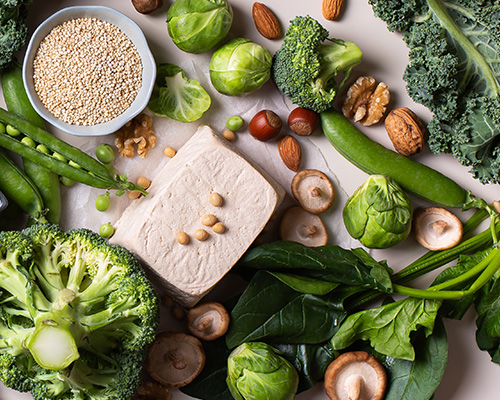
Opportunities for the food industry
Faced with a growing demand for natural foods and proteins, the food industry will now have an opportunity to innovate and expand its portfolio through products that meet the expectations of modern consumers.
The development of new formulations, investment in functional ingredients and the search for sustainable alternatives are all strategic factors for companies looking to set themselves apart from the competition.
Some of the key trends and opportunities that are expected drive the food industry forward in the coming years are presented below.
High-protein plant-based foods
Plant-based products have been consolidated as one of the main trends in the food industry.
According to data from the Mintel Global New Products Database, the launch of new products with packaging containing plant-based claims has grown rapidly in recent years. This market continues to expand, with projections indicating that it could reach a global value of US$160 billion by 2030, driven by the search for health-conscious content, sustainability and innovation in protein formulations.
Companies are therefore investing in alternative protein sources, such as proteins sourced from peas, lentils, and algae, to develop foods that combine flavor, texture, and nutritional benefits.
The main challenge for the industry lies in technological innovation that ensures products offer a pleasant sensory profile and an adequate protein intake. This is possible, for example, through our TasteFull Technologies, which were developed to improve products through the reduction or inclusion ingredients for consumers seeking out a healthier formulation without sacrificing taste.
You may also be interested in reading: 5 most used methods for extracting natural active ingredients for foods, beverages and supplements

Functional protein drinks
The protein beverage market has also shown significant growth, driven by increased demand for convenience and nutrition combined with practicality.
We discussed this trend further in our article “Natural foods and beverages: what lies ahead for the marketplace?” in which we covered the trends observed at Naturaltech 2024, America’s largest natural products trade show.
Protein shakes, enriched vegetable milks and sports drinks with formulas containing natural ingredients are winning over consumers looking to maintain a balanced diet in the midst of often hectic routines.
The addition of ingredients such as vitamins, minerals and fiber makes these drinks even more attractive to the public.
Healthy & Protein Snacks
According to data from Statista, the Brazilian snack food market is expected to grow 6.49% annually until 2029, reaching a total of US $126.8 million.
Snacks rich in protein and natural ingredients are meeting the growing demand for practical and nutritious options that support a busy lifestyle.
Protein bars with clean label formulations, legume-based chips and nuts combined with vegetable proteins are examples of products that are conquering modern consumers.
This niche within natural foods and and proteins will undoubtedly generate significant opportunities for the food industry to innovate and meet these new consumer needs.
But to take advantage of the opportunity, it is important to remember that, in addition to nutritional aspects, the packaging and presentation of these snack items are fundamental to attracting and retaining customers.
Hybrid products: combination of plant and animal proteins
An emerging trend in the food industry is the creation of hybrid products, which combine plant and animal proteins to offer an optimized nutritional profile.
This approach seeks to provide the essential amino acids necessary for the body, since, as explained in an article published in the scientific journal MDPI, plant proteins, for the most part, are incomplete in terms of essential amino acids. Animal proteins, however, generally contain these amino acids in their entirety.
Additionally, the combination of different protein sources can improve the digestibility and nutritional quality of an individual’s diet.
This innovation has been well received by flexitarian consumers looking to reduce meat consumption without giving up the characteristic taste and texture of animal proteins.
By combining plant and animal proteins, it is possible to create products that cater to such preferences, providing a satisfying sensory experience and a high protein value.
How is Duas Rodas making this transformation?
At Duas Rodas, we are following these transformations closely to offer innovative solutions that combine healthy and natural ingredients and flavor.
Our ingredients are developed to meet the new emerging requirements of the market, making it possible to create personalized products that are aligned with consumer expectations and global trends.
Through our portfolio, we are able to develop products that complement the desired indulgence without sacrificing healthy content. For example, Duas Rodas relies on fat-based fillings with zero added sugar, T-Sweet technology (natural flavor that enhances the sensation of sweetness in sugar-reduced products, without leaving unpleasant residues), and many other options. Learn more at the link below.