

'/%3E%3Cpath%20fill='%23b2b2b2'%20d='M241%20382q0%2016%2017%2026%2017%2011%2042%2011t42-11q16-11%2017-26V269H241'/%3E%3Cpath%20fill='%239f7e00'%20d='M241%20379q0%2014%208%2023%209%209%2021%209%2014%200%2021-9%209-9%209-23V269h-59'/%3E%3Cpath%20d='M241%20339v-70h59v110q0%2014-9%2023l-6%205v-68h-15v72q-8%200-14-4v-68zm59%2040c0%2022%2015%2032%2029%2032%2021%200%2030-18%2030-32v-40h-59'/%3E%3Cpath%20fill='%239f7e00'%20d='M266%20277v5h2v12h-3v-5h2v-5h-9v5h2v5h-4v9h3v18h-5v10h34v-10h-5v-18h3v-9h-4v-5h2v-5h-9v5h2v5h-3v-12h2v-5zm42%20101q0%2010%206%2017%206%206%2015%207%2010-1%2016-7%206-7%206-17v-29h-43'/%3E%3Ccircle%20fill='%230044ad'%20cx='329.5'%20cy='372'%20r='6'/%3E%3Cellipse%20fill='%230044ad'%20cx='300'%20cy='340'%20rx='16'%20ry='21'/%3E%3C/svg%3E)


The RTD (Ready-to-Drink) tea market in Brazil has been growing steadily in recent years, both in volume and value, although at different rates.
According to Euromonitor data, the category grew from BRL 2.3 billion in 2020 to more than BRL 3.8 billion in 2025, with projections reaching BRL 5.2 billion by 2030. During the same period, volume increased from 164.1 million to 239 million liters, with expectations of reaching 274.8 million liters.
This gap between value growth, averaging 6.3% annually, and volume growth, at 2.8%, indicates an ongoing premiumization of the category. More than simply increasing consumption, the market is moving toward products with higher perceived value.
This transformation is directly tied to changes in consumer behavior, as consumers seek healthier, more functional, convenient beverages with greater sensory complexity. In this scenario, new approaches to beverage development are gaining traction, especially those that combine technical performance with an enhanced consumption experience.
Throughout this content, you will learn how these trends are impacting beverage development and how to strategically explore new possibilities with aqueous extracts. .
Also read: Yerba mate, the green jewel of Latin America: a new way of thinking beyond matcha
How is the RTD tea market evolving in Brazil?
The latest data from Mintel helps illustrate how this growth is taking shape at the point of sale. Between January 2023 and December 2025, 56 RTD tea launches were recorded in Brazil, with highlights including flavors such as:
- Traditional – mate and black tea (12.5%)
- Hibiscus (10.7%)
- Ginger (10.7%)
- Lemon (8.9%)
- Peach (8.9%)
- Lychee, guaraná, apple and honey (7.1% each)
In addition to the flavors, the positions also reveal the direction of the category:
- Sugar-free (32.1%)
- Organic (25.0%)
- With vitamins and minerals (16.1%)
- Functional – energy (14.3%)
Globally, ready-to-drink tea launches grew by 33% between 2024/25 compared to 2020/21, while in Brazil, 59% of consumers show interest in blended non-alcoholic beverages.
These figures point to a market where sensory innovation, functionality, and ingredient composition are becoming key drivers in the development of new beverages.
What trends are shaping the consumption of tea-based beverages?
An analysis of recent launches and formulations shows that the category is evolving across multiple layers, meaning not only in flavor, but in the product’s overall value proposition.
Health and functional appeal
Tea carries a cultural association with wellness, which supports its growth in beverages with more balanced positioning. Ingredients such as chamomile, yerba mate, mint, and lemongrass frequently appear not only for their sensory profile, but also for their association with relaxation, freshness, and energy.
Chamomile, for example, delivers a sweet, floral, and herbal profile associated with a calming sensation. Hibiscus delivers balanced acidity and vibrant color, while yerba mate stands out for its energizing character and more intense flavor.
Clean label and perceived naturalness
The growth of sugar-free and organic products shows that consumers value simpler, more recognizable formulations. In this context, ingredient origin and extraction process are becoming direct factors in consumer choice.
Convenience and expanded consumption occasions
The RTD format allows tea to occupy spaces once dominated by soft drinks, energy drinks, and even alcoholic beverages, expanding its presence across everyday and social consumption occasions.
Blended beverages and sensory complexity
The 59% interest in blended beverages reinforces an important shift: tea is increasingly serving as a base for more complex creations, integrating fruits, botanicals, spices, and other flavor systems.
Also read: 2026 food trends: what will drive innovation in the Food and Beverage Market
How does innovation in flavors and formats expand the possibilities in the category?
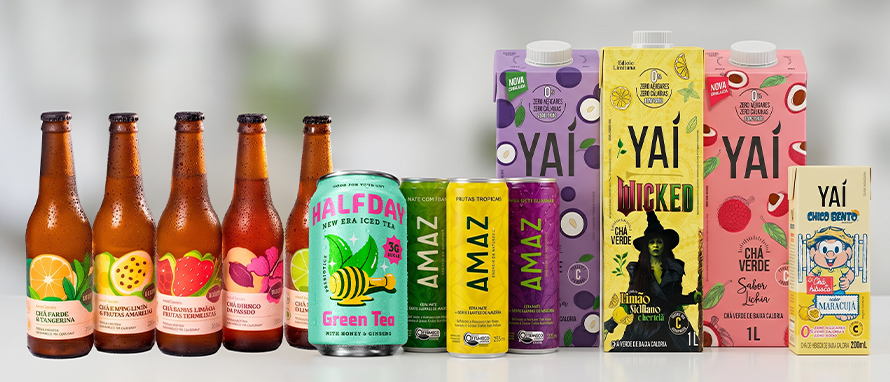
The expansion of the category can be clearly seen in recently launched products. In Brazil, Amaz launched sparkling yerba mate beverages featuring Amazonian ingredients and 70 mg of natural caffeine, exploring flavors such as mate with lemon, tropical fruits, and açaí with guaraná.
Meanwhile, Yaí focuses on ready-to-drink teas positioned around wellness and convenience, featuring combinations such as green tea with jabuticaba, green tea with lychee, green tea with Sicilian lemon and mint, as well as hibiscus with guaraná.
Another example is Brazô, which offers lightly sparkling teas that are low in calories and contain no added sugar, in flavors such as hibiscus with peach, yerba mate with lemon, lemongrass with red berries, and green tea with tangerine.
In the United States, Halfday is expanding the category’s functional appeal with a non-carbonated iced green tea enriched with plant-based fibers and prebiotics, positioned around gut health and digestive wellness.
These examples show that innovation goes beyond simply introducing new flavors. It involves:
- Reformulation of bases (carbonation and blends)
- Incorporation of functional ingredients
- Sugar reduction
- Exploration of new textures and experiences
For R&D, this expands the role of tea from a standalone ingredient to a platform for sensory and functional development.
What is the importance of water-extracted ingredients in beverage development?
Developing tea-based beverages requires solutions that combine technical performance, stability, and consistent sensory delivery. In this context, water-extracted ingredients play a central role by simultaneously meeting regulatory, functional, and sensory requirements.
From a regulatory standpoint, MAPA Ordinance No. 123/2021 establishes that tea-based beverages must use ingredients obtained through water extraction, and hydroalcoholic extracts are not permitted as the sole base of the formulation.
This requirement makes the choice of extraction technology a determining factor from the very early stages of product development.
From a technical standpoint, powdered water extracts present well-known limitations, such as the loss of volatile compounds during drying, lower flavor and taste contribution, and solubility challenges.
These characteristics can directly impact beverage performance, especially in applications that require greater sensory intensity and long-term stability.
In this scenario, liquid water extracts emerge as an alternative, as they better preserve aromatic compounds and are ready for direct application, supporting batch-to-batch standardization, beverage homogeneity, and consistent performance across different matrices.
In addition, they allow for greater precision in the development of sensory profiles, contributing to more balanced beverages that are better aligned with consumer expectations.
By combining regulatory compliance, technical efficiency, and consistent sensory delivery, water-extracted ingredients are becoming a strategic foundation for the development of more complex and competitive beverages.
How can R&D teams explore new applications with tea extracts?
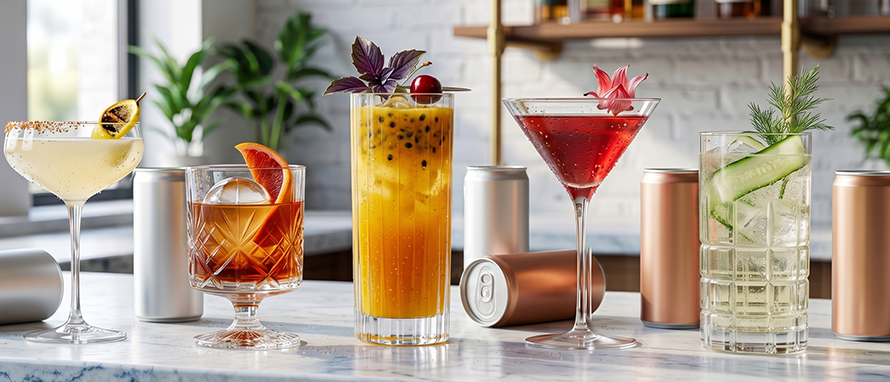
The versatility of tea extracts allows their application to expand beyond ready-to-drink teas, creating opportunities for innovation across different beverage categories.
In blended beverage formulations, extracts can be combined with juices, soft drinks, or functional ingredients, creating more complex sensory profiles aligned with the hybrid beverage trend.
In energy drinks, especially those with a more natural positioning, tea contributes vegetal notes and a perception of functionality, while also complementing caffeine delivery.
Tea extracts are also gaining ground in mocktails and premium non-alcoholic beverages, where they enable the creation of more sophisticated sensory experiences through combinations with fruits, spices, and botanicals.
This flexibility expands the development toolkit and enables R&D teams to create beverages with greater added value, aligned with emerging consumption occasions and evolving market expectations.
Also read: The new era of mocktails: Sophisticated, premium non-alcoholic beverages
How do the solutions from DR Flavors & Ingredients support sensory beverage development?
Developing tea-based beverages requires precision in defining the sensory profile, along with consistency throughout the entire production process. In this context, the use of structured water extracts contributes to greater predictability and control in formulation.
At DR Flavors & Ingredients, the portfolio of aqueous tea extracts food preparations was developed to meet current beverage development demands, combining regulatory compliance, technical performance, and sensory design.
The portfolio includes a variety of tea profiles and combinations that make it possible to develop everything from lighter, more refreshing beverages to more complex and functional concepts, keeping pace with market evolution and consumer preferences.
The goal is to enable R&D teams to work with greater precision in sensory development, adjusting intensity, balance, and flavor identity across different applications, such as ready-to-drink beverages, energy drinks, blended beverages, and mocktails.
Discover the tea collection – DR aqueous extracts
The portfolio brings together an exclusive collection developed from natural extracts obtained through water extraction, in ready-to-use liquid preparations focused on authentic flavor, natural appearance, and consistent sensory performance.
It includes different bases, each with its own sensory identity:
- Chamomile: sweet, floral and herbaceous
- Hibiscus: fruity, vibrant and acidic
- Mint: menthol and refreshing
- White, green and black tea: variations ranging from light herbaceous to full-bodied
- Lemongrass: citrus, aromatic and smooth
- Green and roasted yerba mate: intense profiles with bitterness and roasted notes.
All extracts are available in “with sugar” and “with sugar + sucralose” versions. This structure provides greater flexibility in development, especially for products with reduced sugar content or different sweetness profiles.
Signature blends: sensory direction applied to development

In addition to its technical foundation, the collection of teans with aqueous extracts incorporates a layer of sensory creation developed in partnership with tea sommelier Carla Saueressig. The featured blends serve as applied references for product development:
- Zesty Mate: Roasted mate and lemongrass with lime and ginger flavor.
- Alva: White tea with soursop, green grape and vanilla flavor.
- Hibiscus Spritz: Hibiscus energy drink with strawberry, cherry and citrus vanilla flavor.
- Ventu: Lemongrass chamomile with mint and hog plum flavor.
- Solaz: Green mate energy drink with peach, mango and ginger flavor.
- Neroá: Mixed gin alcoholic drink with black tea, passion fruit, mango and coriander flavor.
These combinations demonstrate, in practice, how to work with contrast, balance, and complexity within the category, expanding application possibilities across different segments.
Also read: Non-alcoholic beverages: innovation, well-being and convenience drive a changing market
The growth of the RTD tea category in Brazil is driven not only by increased consumption, but also by the evolution of the types of products reaching the market. Water-extracted ingredients are becoming an essential technical foundation in this landscape, offering performance, regulatory compliance, and sensory authenticity.
Exploring these possibilities means advancing the development of more relevant beverages, aligned with consumer behavior and prepared for the category’s next movements. Contact us and let’s develop your next successful drinks together.